Research
1) A Lipid-Induced RNA-Binding Protein in Atherosclerosis
Atherosclerosis is a chronic inflammatory vascular disease resulting from maladaptive inflammatory response to an imbalanced lipid metabolism. The cholesterol-laden, foamy macrophages found in plaques play a pivotal role in perpetuating the sterile inflammation that is characteristic of atherosclerosis. Transcriptional control plays a critical role in setting into motion this sterile inflammation. Post-transcriptional mechanisms that operate in atherosclerosis can contribute to resolution of inflammation and promote plaque regression, presenting a therapeutic opportunity. Ribonucleic acid RNA-binding proteins (RBP) alter cytokine and chemokine messenger RNA (mRNA) stability or translation to fine-tune or turn-off the inflammatory response. RBPs also post-transcriptionally regulate key proteins for cholesterol homeostasis and lipid metabolism in macrophages and liver. Despite regulating inflammation, lipid metabolism and cholesterol homeostasis — thereby representing a novel therapeutic opportunity in cardiovascular disease — only a few RBPs and their RNA targets have been directly investigated in atherosclerosis.
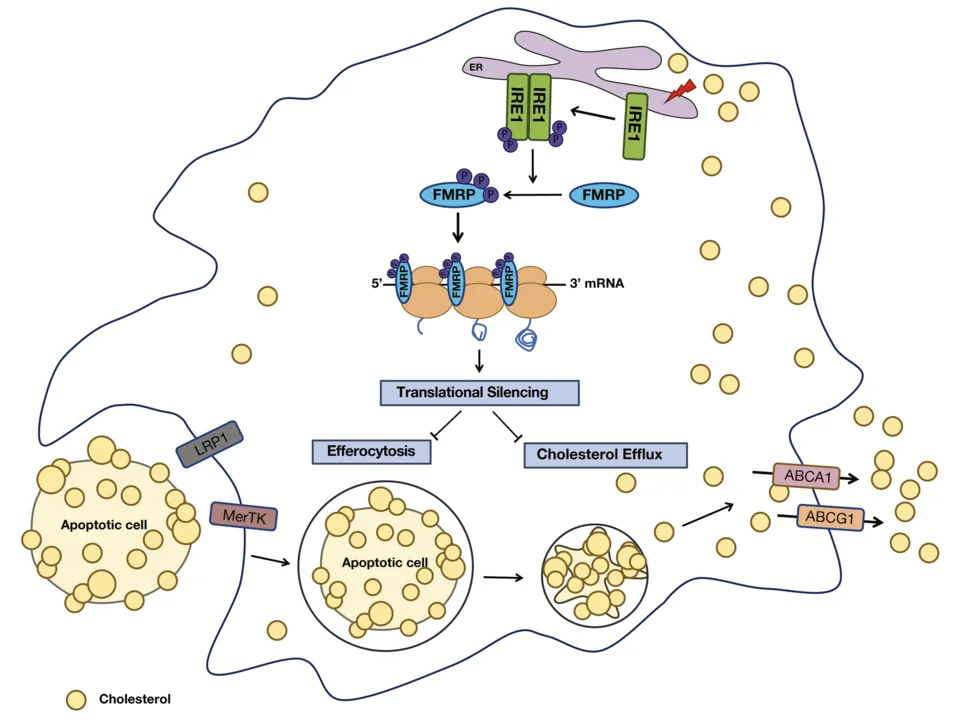
IRE1‐FMRP signaling controls cholesterol efflux and efferocytosis pathways in macrophages. IRE1‐mediated FMRP phosphorylation suppresses translation of mRNA for key cholesterol transporters and efferocytosis receptors in macrophages and promotes atherosclerosis.
Fragile X Mental Retardation protein (FMRP), widely known for its role in hereditary intellectual disability, is an RNA‐binding protein (RBP) that controls translation of select mRNAs. We discovered that endoplasmic reticulum (ER) stress induces phosphorylation of FMRP on a site that is known to enhance translation inhibition of FMRP‐bound mRNAs. We showed ER stress‐induced activation of Inositol requiring enzyme‐1 (IRE1), an ER‐resident stress‐sensing kinase/endoribonuclease, leads to FMRP phosphorylation and to suppression of macrophage cholesterol efflux and apoptotic cell clearance (efferocytosis). Conversely, FMRP deficiency and pharmacological inhibition of IRE1 kinase activity enhances cholesterol efflux and efferocytosis, reducing atherosclerosis in mice. Altogether, our findings provide mechanistic insight into the translational regulation of cholesterol efflux and efferocytosis in ER‐stressed macrophages and highlight IRE1 kinase domain and its effector, FMRP, as novel therapeutic targets for atherosclerosis. In our ongoing work, we are investigating FMRP’s role in immune aging and its connection to atherosclerosis.
2) Linking Lipid Stress to Atherosclerosis
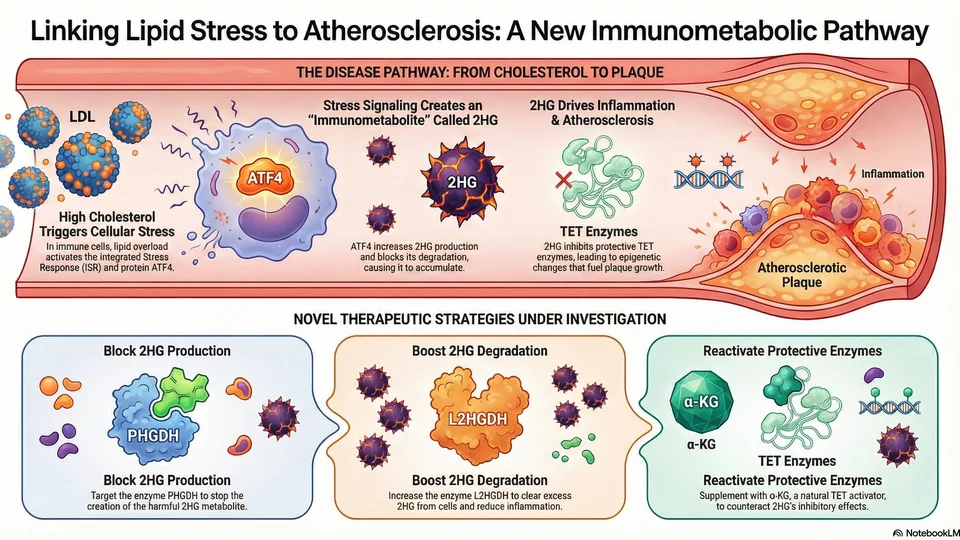
We recently demonstrated the causality of integrated stress response (ISR) activation in atherosclerosis, but a therapeutic strategy based on the inhibition of this essential, homeostatic signaling poses challenges. In our ongoing studies, we uncovered specific metabolic pathways and epigenetic mechanisms that link the ISR to heightened inflammation and atherosclerosis. Furthermore, in collaboration with an industry partner, we are investigating novel therapeutic opportunities in cardiovascular disease.